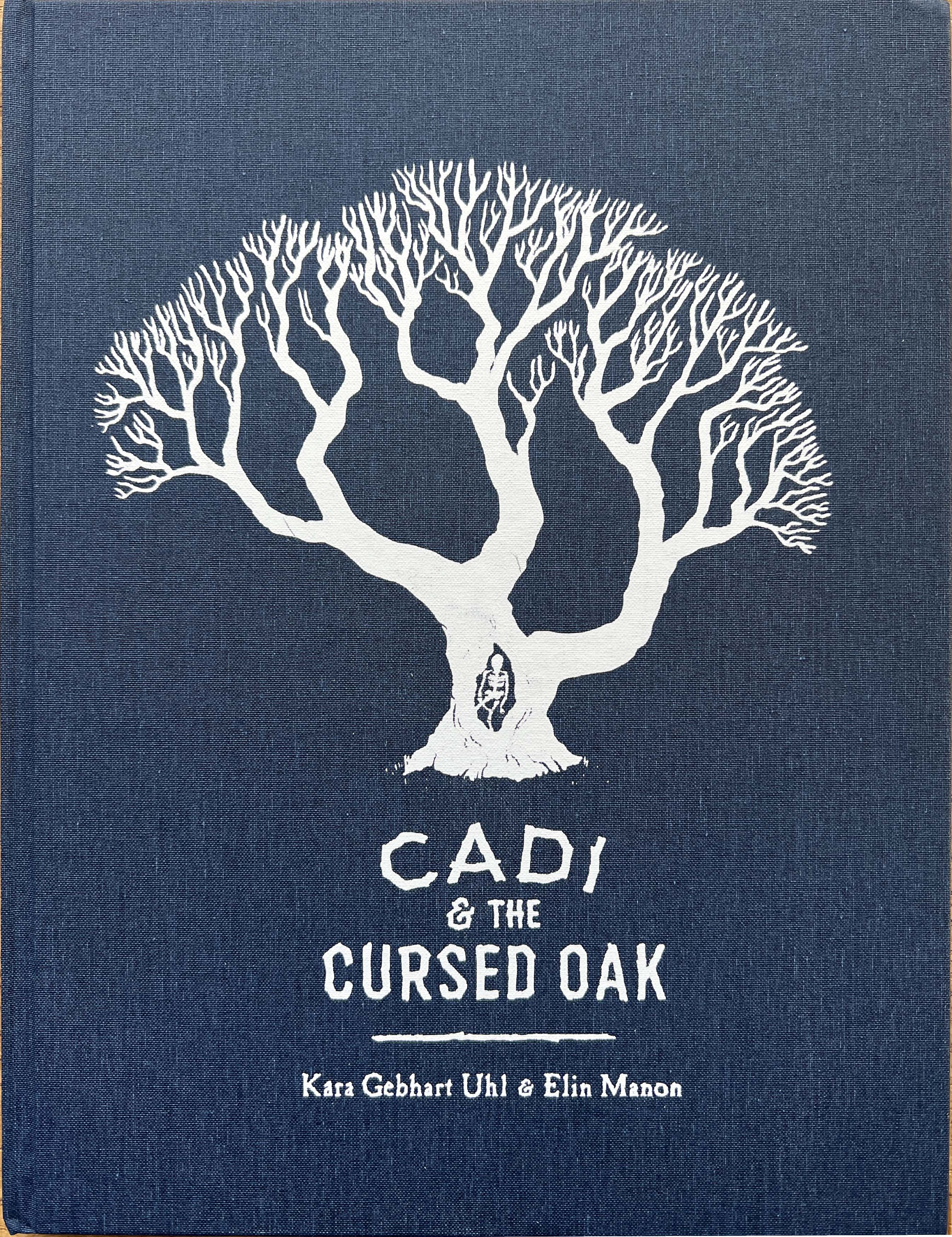
Cadi & the Cursed Oak
written by Kara Gebhart Uhl, illustrations by Elin Manon
You can download an excerpt of this book here. An audio pronunciation guide to the Welsh words in the book is here.
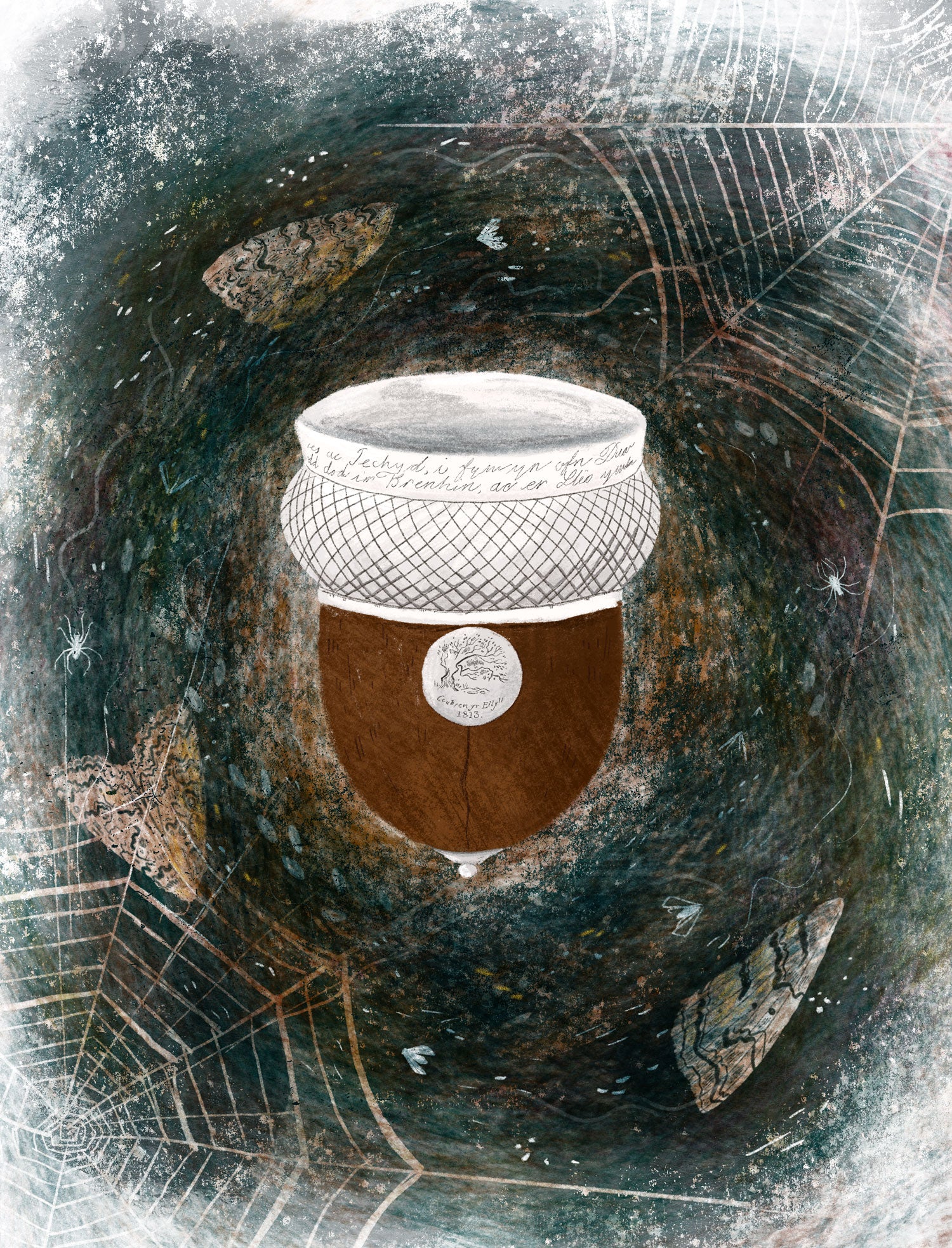
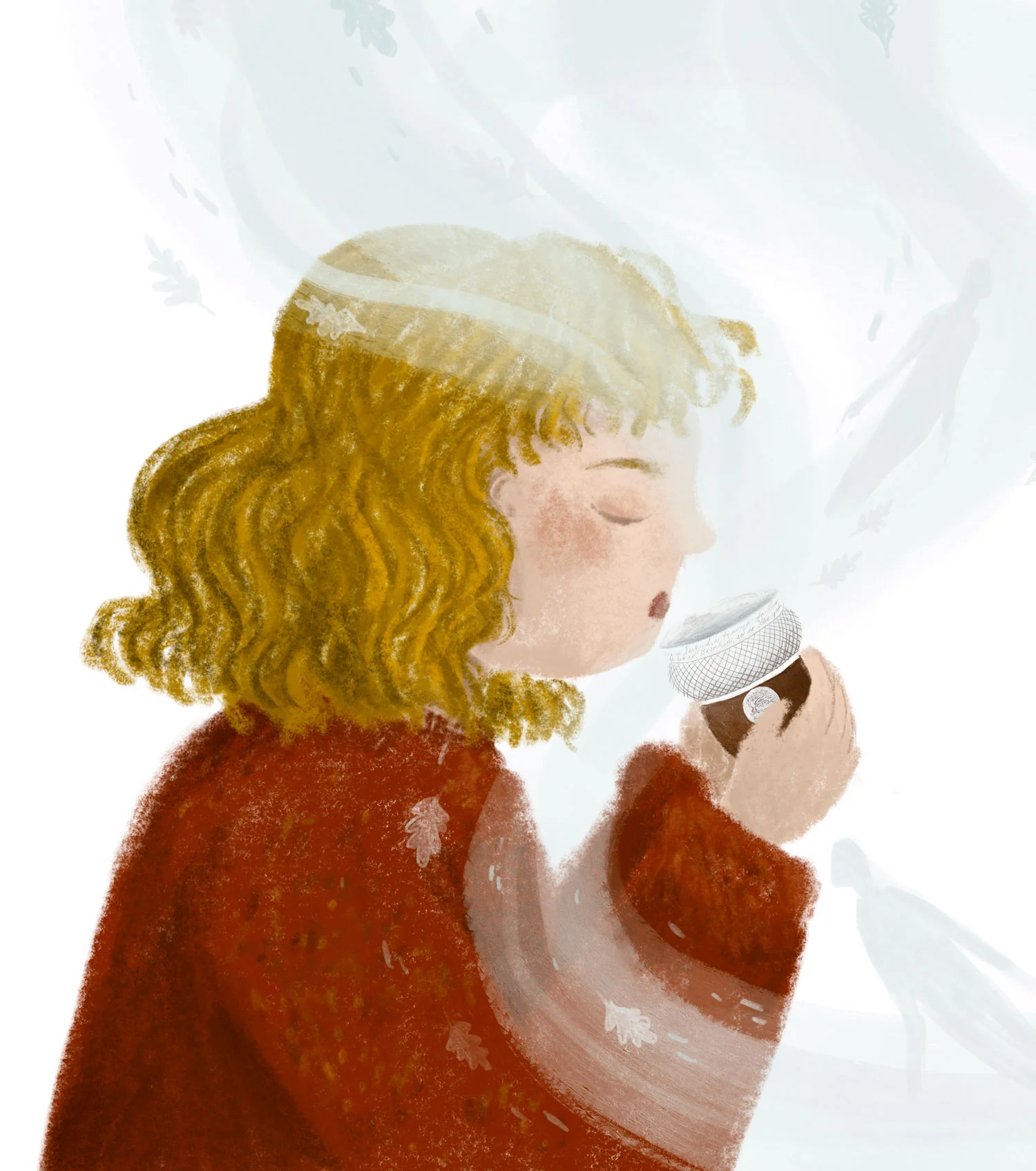
"Cadi brought the cup’s silver rim to her lips. What she didn’t know was that buried deep
in the cup’s oak sleeve were spirits’ stories, long forgotten tales of hobgoblins and demons and death and sorrow, of things passed down and whispered in the dark, to scare and to warn. The bee’s-breath crack had awakened them, and with one small sip of water, Cadi drank them all in."
The Nannau oak, which once grew just outside of Dolgellau, Wales, was long considered cursed. Also known as the "spirit’s blasted tree," "the skeleton tree" and the "hollow tree of the ghost," some say the tree was originally used for witch trials in the Middle Ages, a courtroom made of branches and leaves. But the tree was mostly feared for something that happened long before.
Owain Glyndŵr, a leader of Welsh nationalism, had a longstanding feud with Hywel Sele, the 9th Lord of Nannau. Owain visited Hywel in 1402, and while bow hunting, Owain killed Hywel and hid his body in the hollow of the Nannau oak, where it remained entombed for 40 years.
In 1813, the Nannau oak fell in a terrible storm. By this time it measured 28' around and was more than 900 years old. Wood was collected and quite a few things were made from it – tables, candlesticks, picture frames and some lovely silver cups with oak sleeves, turned in the shape of acorns, one hand high, as if they had been crafted by a child. Legend says if you drink from one of the acorn cups, the tree’s stories will haunt you.
After spending more than a year researching the Nannau oak, author Kara Gebhart Uhl took all the legends, facts and centuries-old stories to craft a new children's tale, this one centered around Cadi, a Welsh stick chairmaker’s daughter, who drinks in the tree’s spirits’ stories from one of the acorn-shaped cups.
With one sip, readers are swept into Cadi’s world, listening to her mum read a tale about three plagues and fighting dragons; discovering an old plaster scene of witches on trial under a tree made with branches from the Nannau oak embedded within; navigating frightening dreams where old oaks fight back; hunting for Welsh stick chair arm bows with her dad; and walking to a timeworn wooden door in the Nannau deer park with her grandmother, who then tells her the skeleton tree’s entire haunted tale. All the while Cadi is faced with a seemingly impossible task: How do you stop stories that are too scary, sad or difficult to bear?
“Cadi & the Cursed Oak” is gorgeously illustrated by Elin Manon, who grew up in Cardiff, Wales. Often inspired by the natural world, folklore and folk traditions, Elin aims to bring a sense of magic to the everyday, reflecting stories of the landscape, in a world that is often focused on the modern and material. The longer you look at each of Elin’s richly detailed illustrations, the more subtle surprises you see.
The last page of the book contains a glossary and simple pronunciation guide for a handful of Welsh words and phrases scattered throughout the text, written by Dr Iwan Wyn Rees, lecturer and director of the Cardiff Centre for Welsh American Studies at the School of Welsh.
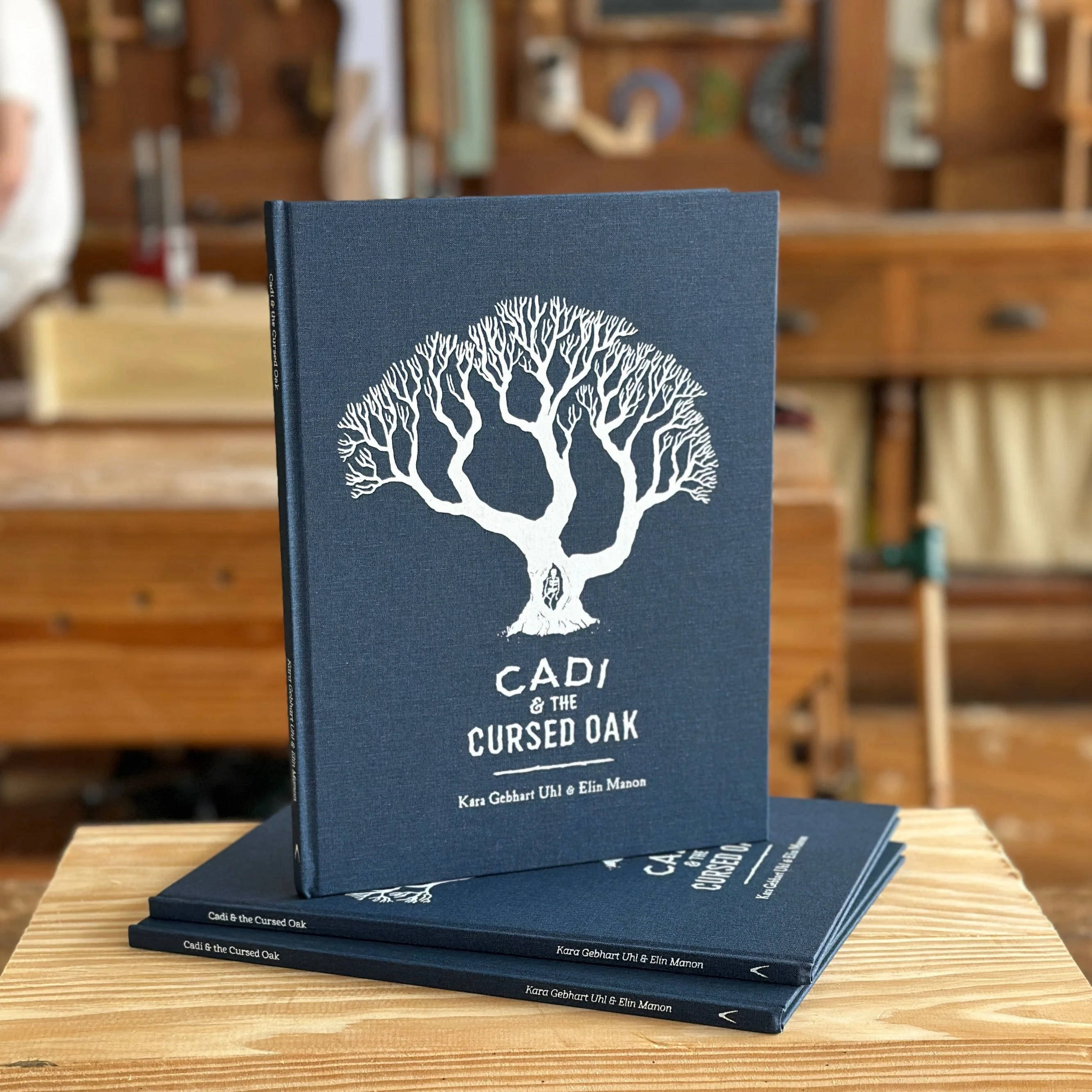
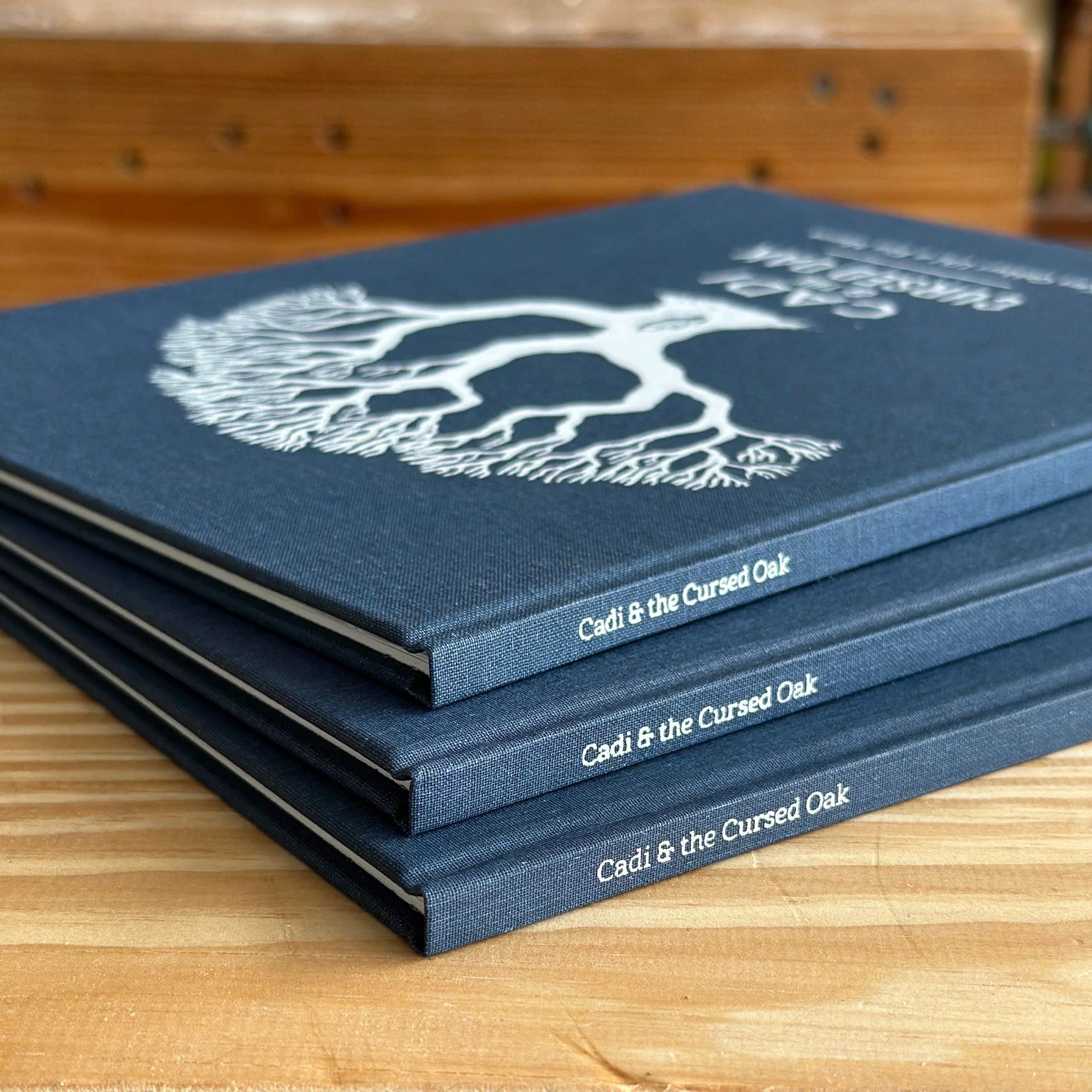
“Cadi & the Cursed Oak” is 48 pages and printed on a brilliant white 80# coated paper. The pages are sewn, glued and taped for durability. The 8-1/2” x 11” book is wrapped in a cotton-linen blend dark blue cloth cover with a matte white foil stamp, hand-lettered by Nicholas Moegly. It is produced and printed in the United States.
Is 'Cadi' Right for My Child?
The book has some frightening scenes and a few ominous ideas and is probably best suited for children ages 8+. But every child is different, and you know your child best.
About the Author and Illustrator

Kara Gebhart Uhl
Kara Gebhart Uhl has been writing and editing professionally for 20+ years. She is managing editor at Lost Art Press and a contributing editor at Writer’s Digest magazine. She also freelance writes and edits for book publishers, magazines, universities, blogs and companies. After graduating with a magazine journalism degree from Ohio University, one of her first jobs was assistant editor at Popular Woodworking magazine. There she learned “rabbet” is almost always spelled with an “e” and, in between editing, with the help of fellow editors, she built several pieces of furniture she still uses daily (including a Welsh stick chair that’s only slightly cursed). Her essays and poetry have appeared in The New York Times, Literary Mama, Motherwell, TIME and "This I Believe: Life Lessons" (Wiley).

Elin Manon
Elin Manon is a freelance illustrator from Wales now based in Falmouth, Cornwall. Elin’s work is inspired by the natural world, ecology, folklore and anthropology. A passion for storytelling and the celebration and protection of our natural world has been a constant drive within her work and creative process. Through her work she hopes and aims to deepen our connection to the natural environment, reflecting stories of the landscape, in a world that is often focused on the material. Since graduating from Falmouth University in 2020, she has gone on to have the pleasure of working with a number of publishers and clients, including Google, Gwasg Carreg Gwalch, Resurgence and Ecologist, Inkcap Journal, Elliot and Thompson, Quarto, Hachette, The Maverick Guide, Urdd Gobaith Cymru, Tikino, Lorien Motion Pictures, A Year and a Day and St Austell Print.
Original: $19.00
-70%$19.00
$5.70Product Information
Product Information
Shipping & Returns
Shipping & Returns
Description
written by Kara Gebhart Uhl, illustrations by Elin Manon
You can download an excerpt of this book here. An audio pronunciation guide to the Welsh words in the book is here.
"Cadi brought the cup’s silver rim to her lips. What she didn’t know was that buried deep
in the cup’s oak sleeve were spirits’ stories, long forgotten tales of hobgoblins and demons and death and sorrow, of things passed down and whispered in the dark, to scare and to warn. The bee’s-breath crack had awakened them, and with one small sip of water, Cadi drank them all in."
The Nannau oak, which once grew just outside of Dolgellau, Wales, was long considered cursed. Also known as the "spirit’s blasted tree," "the skeleton tree" and the "hollow tree of the ghost," some say the tree was originally used for witch trials in the Middle Ages, a courtroom made of branches and leaves. But the tree was mostly feared for something that happened long before.
Owain Glyndŵr, a leader of Welsh nationalism, had a longstanding feud with Hywel Sele, the 9th Lord of Nannau. Owain visited Hywel in 1402, and while bow hunting, Owain killed Hywel and hid his body in the hollow of the Nannau oak, where it remained entombed for 40 years.
In 1813, the Nannau oak fell in a terrible storm. By this time it measured 28' around and was more than 900 years old. Wood was collected and quite a few things were made from it – tables, candlesticks, picture frames and some lovely silver cups with oak sleeves, turned in the shape of acorns, one hand high, as if they had been crafted by a child. Legend says if you drink from one of the acorn cups, the tree’s stories will haunt you.
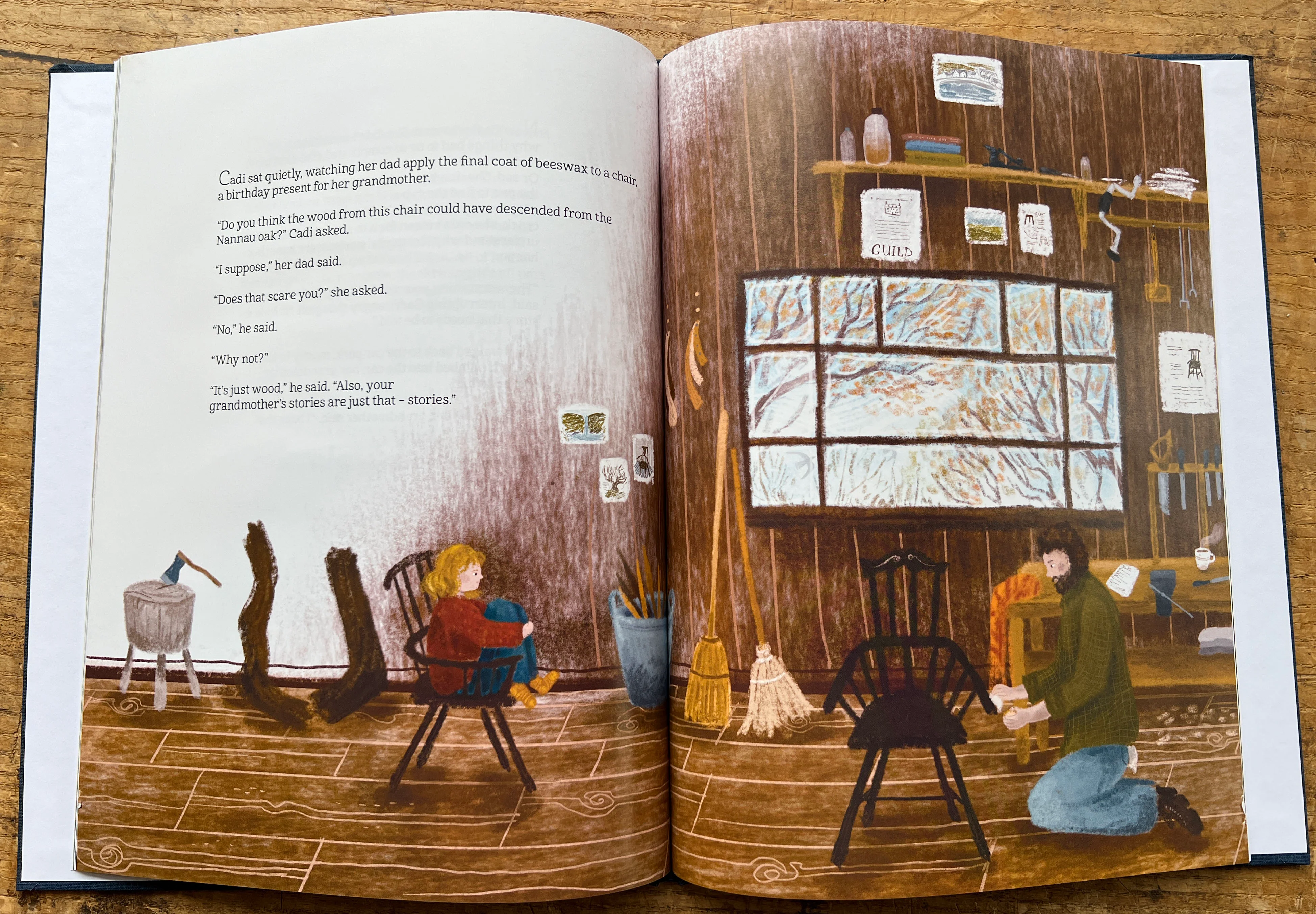
After spending more than a year researching the Nannau oak, author Kara Gebhart Uhl took all the legends, facts and centuries-old stories to craft a new children's tale, this one centered around Cadi, a Welsh stick chairmaker’s daughter, who drinks in the tree’s spirits’ stories from one of the acorn-shaped cups.
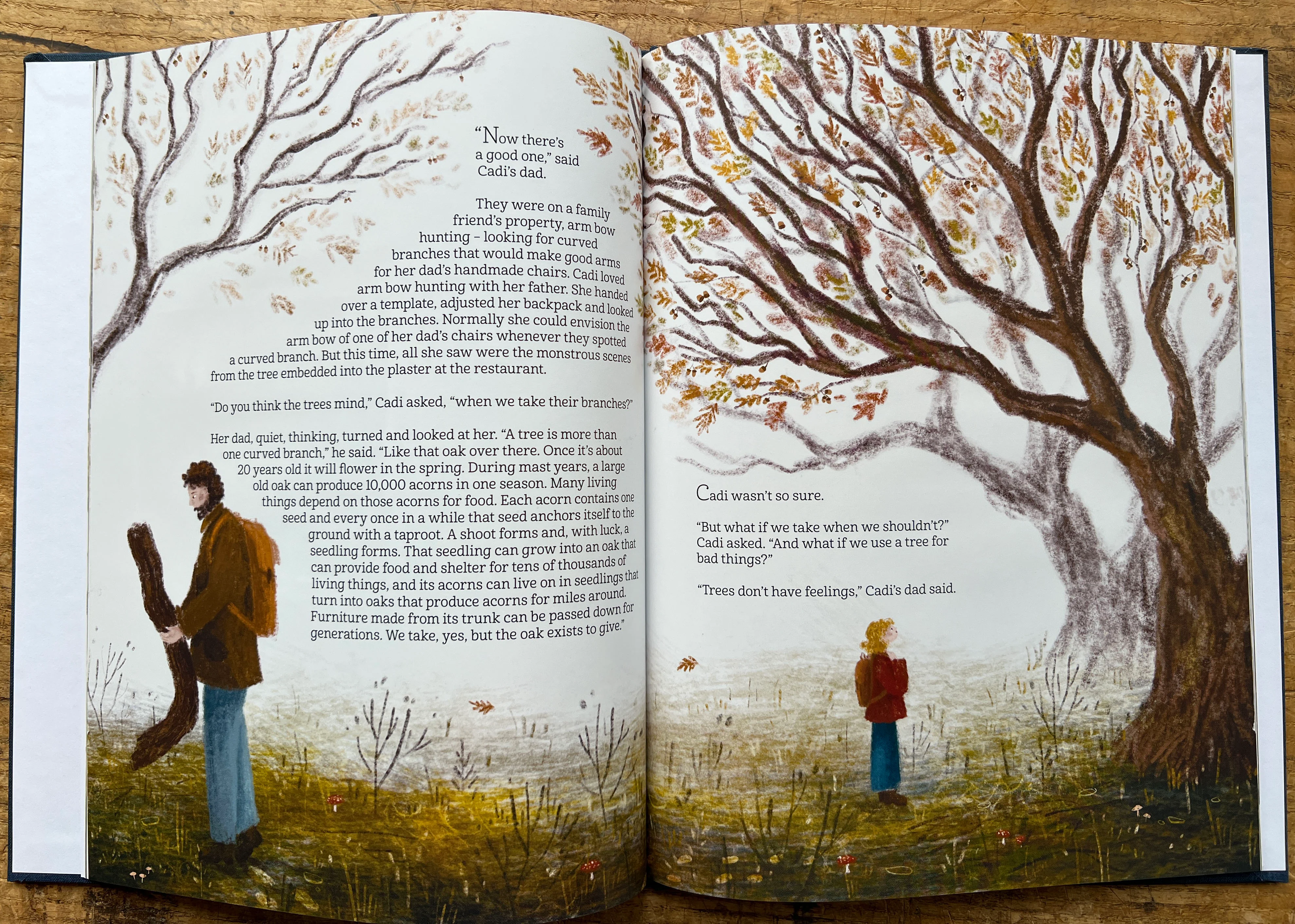
With one sip, readers are swept into Cadi’s world, listening to her mum read a tale about three plagues and fighting dragons; discovering an old plaster scene of witches on trial under a tree made with branches from the Nannau oak embedded within; navigating frightening dreams where old oaks fight back; hunting for Welsh stick chair arm bows with her dad; and walking to a timeworn wooden door in the Nannau deer park with her grandmother, who then tells her the skeleton tree’s entire haunted tale. All the while Cadi is faced with a seemingly impossible task: How do you stop stories that are too scary, sad or difficult to bear?
“Cadi & the Cursed Oak” is gorgeously illustrated by Elin Manon, who grew up in Cardiff, Wales. Often inspired by the natural world, folklore and folk traditions, Elin aims to bring a sense of magic to the everyday, reflecting stories of the landscape, in a world that is often focused on the modern and material. The longer you look at each of Elin’s richly detailed illustrations, the more subtle surprises you see.
The last page of the book contains a glossary and simple pronunciation guide for a handful of Welsh words and phrases scattered throughout the text, written by Dr Iwan Wyn Rees, lecturer and director of the Cardiff Centre for Welsh American Studies at the School of Welsh.
“Cadi & the Cursed Oak” is 48 pages and printed on a brilliant white 80# coated paper. The pages are sewn, glued and taped for durability. The 8-1/2” x 11” book is wrapped in a cotton-linen blend dark blue cloth cover with a matte white foil stamp, hand-lettered by Nicholas Moegly. It is produced and printed in the United States.
Is 'Cadi' Right for My Child?
The book has some frightening scenes and a few ominous ideas and is probably best suited for children ages 8+. But every child is different, and you know your child best.
About the Author and Illustrator
Kara Gebhart Uhl
Kara Gebhart Uhl has been writing and editing professionally for 20+ years. She is managing editor at Lost Art Press and a contributing editor at Writer’s Digest magazine. She also freelance writes and edits for book publishers, magazines, universities, blogs and companies. After graduating with a magazine journalism degree from Ohio University, one of her first jobs was assistant editor at Popular Woodworking magazine. There she learned “rabbet” is almost always spelled with an “e” and, in between editing, with the help of fellow editors, she built several pieces of furniture she still uses daily (including a Welsh stick chair that’s only slightly cursed). Her essays and poetry have appeared in The New York Times, Literary Mama, Motherwell, TIME and "This I Believe: Life Lessons" (Wiley).
Elin Manon
Elin Manon is a freelance illustrator from Wales now based in Falmouth, Cornwall. Elin’s work is inspired by the natural world, ecology, folklore and anthropology. A passion for storytelling and the celebration and protection of our natural world has been a constant drive within her work and creative process. Through her work she hopes and aims to deepen our connection to the natural environment, reflecting stories of the landscape, in a world that is often focused on the material. Since graduating from Falmouth University in 2020, she has gone on to have the pleasure of working with a number of publishers and clients, including Google, Gwasg Carreg Gwalch, Resurgence and Ecologist, Inkcap Journal, Elliot and Thompson, Quarto, Hachette, The Maverick Guide, Urdd Gobaith Cymru, Tikino, Lorien Motion Pictures, A Year and a Day and St Austell Print.